
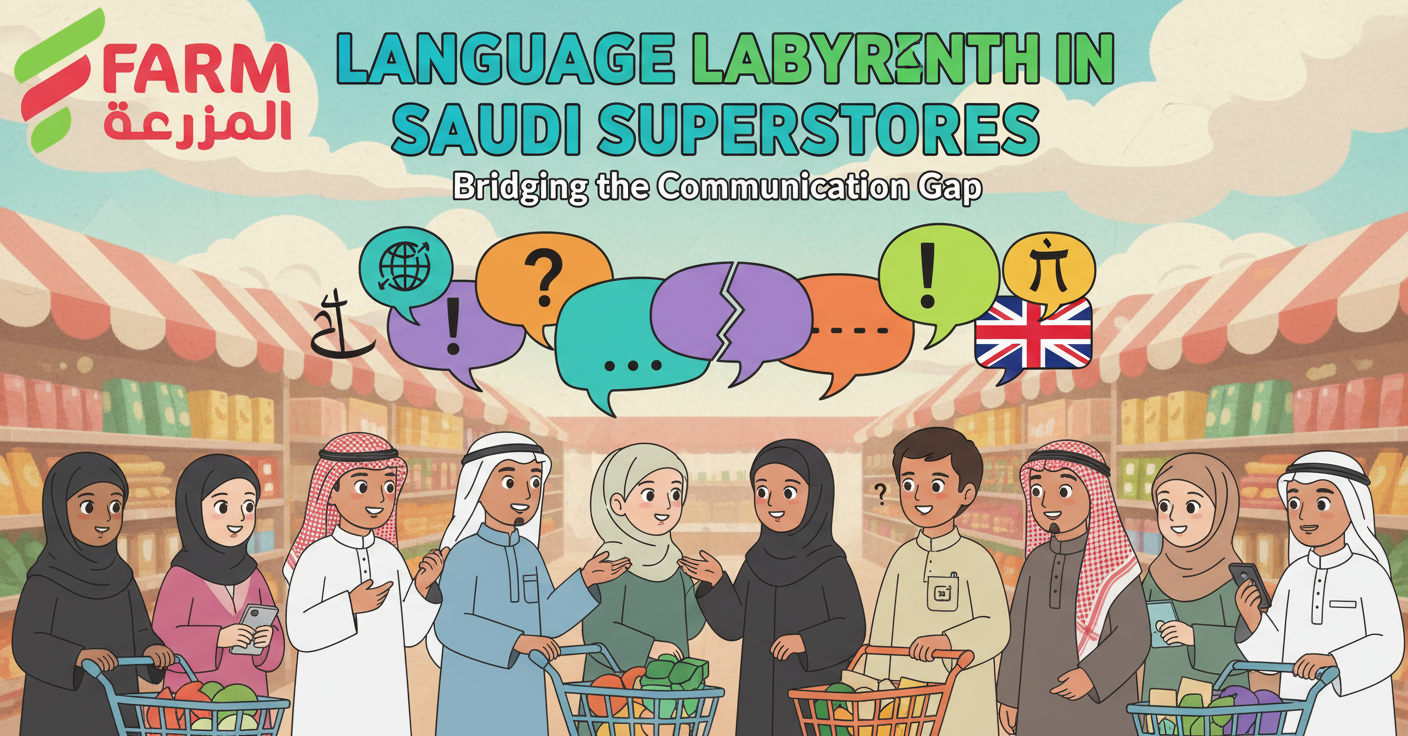
Effective communication is essential for smooth daily operations in retail supermarkets. In Saudi Arabia, Farm Superstores serve a diverse customer base, including Saudi nationals, expatriates, families, and elderly shoppers. Although Farm Superstores are popular for their affordability and wide product range, communication barriers still occur due to language diversity, cultural differences, fast-paced environments, and internal coordination challenges.
1. Language Barriers on the Shop Floor
One of the most remarkable barriers at Farm Superstores is language. Many frontline employees speak limited Arabic, while some customers—especially older shoppers—may not speak English. For example, when a customer asks about product locations or promotion details in Arabic, the employee may misunderstand or provide incomplete guidance. This can lead to frustration, repeated questions, and delays in service.
How to overcome this barrier:
- Provide basic Arabic communication training for non-Arabic-speaking staff
- Use bilingual signage (Arabic and English) for product categories and promotions
- Encourage simple, commonly used Arabic phrases for customer interaction
2. Misunderstandings During Promotions and Offers
Farm Superstores frequently run promotional campaigns, which can cause confusion if employees are not fully informed. Customers may assume discounts apply to all similar products, while the offer is limited to specific brands or sizes. When staff cannot clearly explain the details, disputes may arise at checkout counters.
How to overcome this barrier:
- Conduct short daily staff briefings during promotional periods
- Use clear shelf labels with visual symbols and simplified wording
- Train cashiers on how to calmly explain promotion conditions
3. Cultural Differences in Customer Interaction
Cultural differences can influence communication styles. Some Saudi customers expect polite greetings, patience, and detailed explanations, while employees from different backgrounds may communicate briefly due to cultural norms or workload pressure. This mismatch may be perceived as poor customer service.
How to overcome this barrier:
- Offer cultural awareness training focused on Saudi customer expectations
- Encourage friendly greetings and respectful communication
- Promote customer-service standards across all branches
4. Communication Challenges at Checkout Counters
Checkout areas are high-pressure points where communication breakdowns often occur. Price discrepancies between shelf labels and system prices can frustrate customers. If cashiers lack confidence or clear instructions, the situation may escalate unnecessarily.
How to overcome this barrier:
- Train cashiers in conflict-handling and explanation techniques
- Establish clear procedures for price differences.
- Ensure supervisors are available to support staff during peak hours
5. Internal Communication Between Staff and Management
Poor internal communication can lead to inconsistent information being shared with customers. For example, if product changes or pricing updates are not communicated clearly to all staff, customers may receive conflicting answers.
How to overcome this barrier:
- Use bilingual internal notices and digital communication platforms
- Hold short team meetings at the start of shifts
- Ensure supervisors confirm staff understanding of updates
6. Technology-Related Communication Barriers
Digital price systems, barcode scanners, and payment machines are common in Farm Superstores. Some customers, particularly elderly shoppers, may struggle with these systems. Employees who are not trained properly may find it difficult to assist or explain issues.
How to overcome this barrier:
- Provide hands-on training for staff on retail technologies
- Assign floor staff to assist customers during busy hours
- Use clear visual instructions near self-service machines
7. Impact of Time Pressure and Workload
During weekends, promotions, and salary periods, Farm Superstores experience heavy customer traffic. Under pressure, communication may become rushed, leading to misunderstandings and errors.
How to overcome this barrier:
- Increase staffing during peak hours
- Rotate staff to reduce fatigue
- Encourage calm, clear communication even during busy periods
Conclusion
Communication barriers in Farm Superstores are influenced by language differences, cultural expectations, promotional complexity, internal coordination, and time pressure. Addressing these challenges through staff training, bilingual communication, clearer procedures, and supportive management can significantly improve customer satisfaction and operational efficiency. Effective communication not only enhances the shopping experience but also strengthens employee confidence and workplace harmony.